Most gym logs die in week two. Either you write a novel after the session — feelings, warm-ups, a paragraph about sleep — or you write nothing and swear you'll remember. You won't.
A log that lasts is short. You fill it in the rest between sets, not on the couch at home. The job is a record of what happened under the bar, not a diary of how you felt about it.
The shorthand that works
Keep every work set to the same boring line:
- Date
- Exercise
- Load
- Actual reps (not the target — what you did)
- Optional one-line note if something mattered (form broke, rest ran long, last set was ugly)
Write it during rest. The blank line is waiting while you breathe. If you wait until the locker room, you will round the hard middle up and call it honesty.
Target reps are a plan. Actual reps are the session. Progressive overload is comparing the second of those, not the first.
Paper vs phone
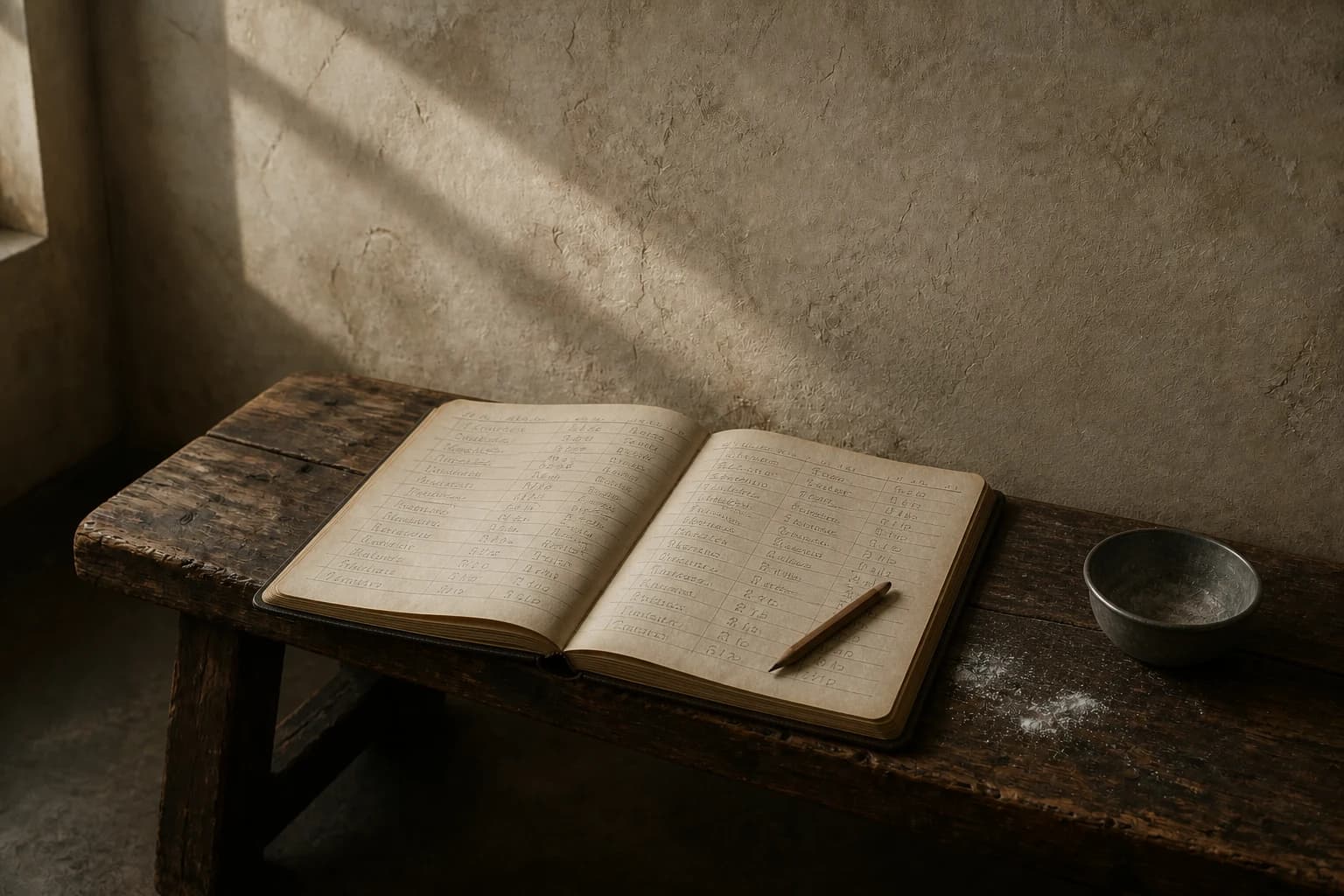
Paper is fine. A notebook that opens to last Tuesday's squat is doing the job. The medium is not the point; the habit is.
A phone log that lives on the home screen does the same thing without a $40 notebook you abandon by March. If you want that install path, it is at /install — secondary, not the hero of this page. The hero is writing the set before the next one starts.
What not to log
Skip the feeling essays. Skip calorie math in the set line. Skip every warm-up set if logging them is what stops you from logging the work. Warm-ups matter for the body; they are optional for the record if the alternative is an empty page.
If a note does not change what you do next session, it does not belong in the log. Put it somewhere else, or nowhere.
How you know it worked
Open last session before the set. Same lift, same scheme — what did the bar do last time? That line is the program. Memory is a story that flatters you.
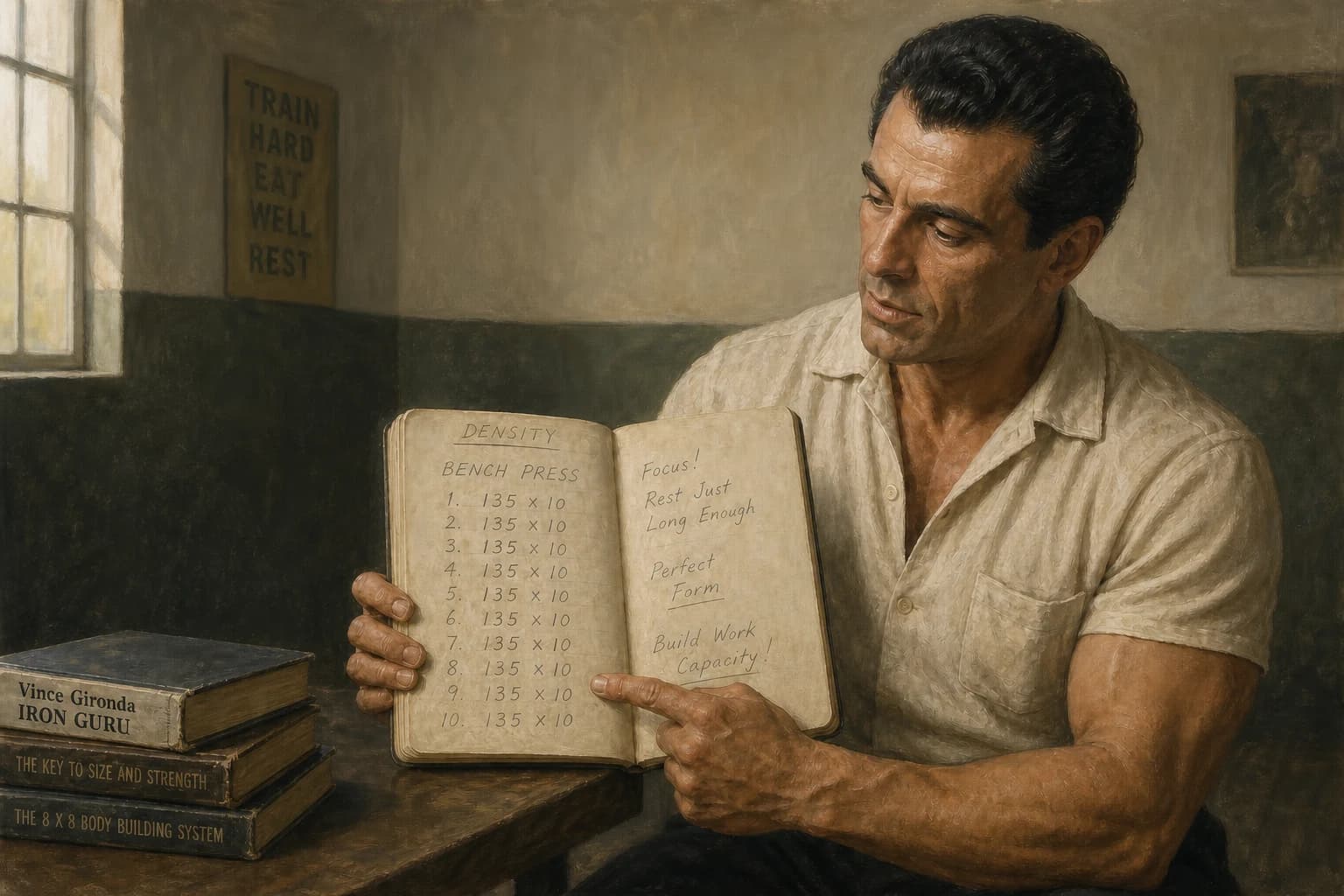
Density work makes this obvious. Protocols like Gironda's 8×8 fail in the middle sets: you remember the pump and invent set seven. The log does not invent. If last session is waiting next to the blank line, overload is a comparison, not a vibe.
Related
Last session is the program. Memory is not.
Logging stays free.